Continuous Glucose Monitoring (CGM) has been one of the most talked-about innovations in diabetes management over the past decade. At the same time, traditional Blood Glucose Meters (BGM) remain widely used across markets and healthcare settings.
For buyers, distributors, and OEM partners evaluating glucose monitoring solutions, the fundamental questions are straightforward:
Is CGM inherently more accurate than BGM?
How large are the typical deviations between these technologies?
And is CGM a mature product that can be trusted at scale?
This article explores these questions with practical insights grounded in clinical practice and real-world usage patterns.
The difference between CGM and BGM starts with what each technology reads:
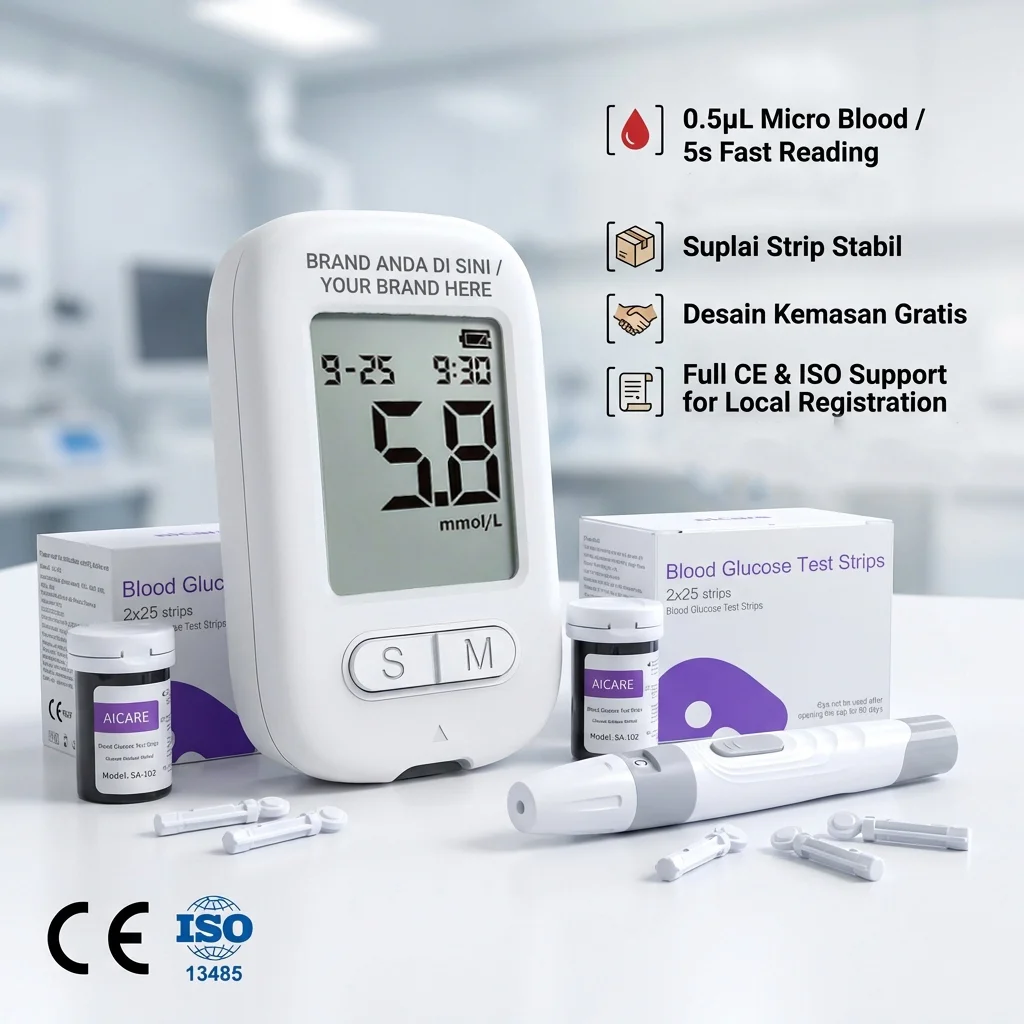
BGM (Blood Glucose Meter) measures glucose directly from a small drop of capillary blood. It gives you an immediate snapshot of a person’s blood glucose level at that moment.
CGM (Continuous Glucose Monitor) measures glucose in the interstitial fluid — the fluid surrounding tissue under the skin — and then uses algorithms to estimate what the blood glucose level would be.
This difference in measurement source explains much of the variation that users and procurement professionals observe in real-world readings.
It might seem intuitive to assume that CGM is “more accurate” because it measures glucose continuously. In reality, the story is more nuanced.
BGMs measure the glucose level in blood directly. Under proper use conditions and following standard calibration practices, BGMs provide reliable point-in-time results that are generally closer to typical laboratory blood glucose measurements — the clinical gold standard.
Most regulatory standards for BGMs require performance within ±15% of a laboratory reference under specified conditions. This benchmark is not perfect, but it is well established and widely understood by procurement teams.
CGM systems, by contrast, derive glucose estimates from interstitial fluid. Because of this physical difference, CGM readings may lag by a few minutes relative to rapid changes in blood glucose — for example after meals or exercise.
In stable conditions, CGM and BGM readings can be quite similar. But during periods of rapid glucose change, the lag inherent to interstitial measurement can produce differences of about 10–20% from a simultaneously taken BGM result.
This phenomenon is well documented in clinical and observational reports and does not automatically imply “inaccuracy.” Rather, it reflects the physiological reality of the measurement source.
The answer depends on how you define accuracy:
For a single point-in-time measure:
BGM tends to be closer to blood glucose reference standards.
For understanding glucose trends over time:
CGM provides information that a series of isolated BGM readings cannot.
In other words, BGM delivers high point accuracy, while CGM delivers high continuity and trend visibility.
Clinical observations and real-world data suggest the following patterns:
CGM readings are often within 10–15% of BGM in stable conditions.
During periods of rapidly rising or falling glucose levels, the difference can be up to 20% or more due to physiological lag.
BGM, when properly performed, generally aligns closely with laboratory measurements and is often used as the reference for calibrating or validating CGM algorithms.
These figures align with clinical comparisons and user experiences shared across professional and patient communities and are widely understood within the diabetes technology field.
The short answer: Yes — with context.
CGM technology has evolved significantly over the past decade. Leading systems such as Dexcom and Abbott Libre have been on the market for years, supported by:
Extensive clinical validation
Multiple generations of sensors and algorithms
Integration with insulin delivery systems and digital health platforms
Increased insurance coverage in several markets
The adoption of CGM in type 1 and insulin-treated type 2 diabetes care pathways — including guideline support in many health systems — is a strong indication of its maturity.
Additionally, many modern CGMs no longer require fingerstick calibration, reducing user burden and aligning usage more closely with how consumers actually live with the device.
CGM is not universally suitable in all scenarios without consideration:
Cost remains higher compared with traditional BGMs, particularly when accounting for ongoing sensor replacements.
Lag during rapid glucose changes means that for certain point-in-time decisions (e.g., determining dose adjustments), complementary BGM testing is still recommended in clinical practice.
Data interpretation requires connection to a receiver or app, which may add complexity in low-connectivity or non-smartphone user segments.
From a procurement perspective, these are not deal-breakers; they are contextual factors that inform product selection based on end-user needs.
Rather than asking “Which one is more accurate?”, the question for buyers should be:
“Which tool best supports the clinical use case, user behavior, and operational environment of the end user?”
To summarize the practical positioning:
BGM is appropriate where:
• Point accuracy is essential
• There is need for regulatory simplicity and low cost
• Episodic testing is sufficient
CGM is appropriate where:
• Continuous trend data is valuable
• There is a need to anticipate highs and lows over time
• Longitudinal data supports clinical or self-management decisions
In many procurement scenarios, a hybrid approach — where CGM is complemented by strategic BGM testing — offers the best overall clinical and economic balance.
CGM and BGM are both established technologies with distinct roles. BGM remains a reliable reference for point accuracy. CGM provides actionable insights over time.
For B2B buyers and channel partners, understanding the complementary strengths of each — rather than simply ranking them by a single metric — leads to better product selection, clearer user expectations, and ultimately, higher satisfaction in the field.
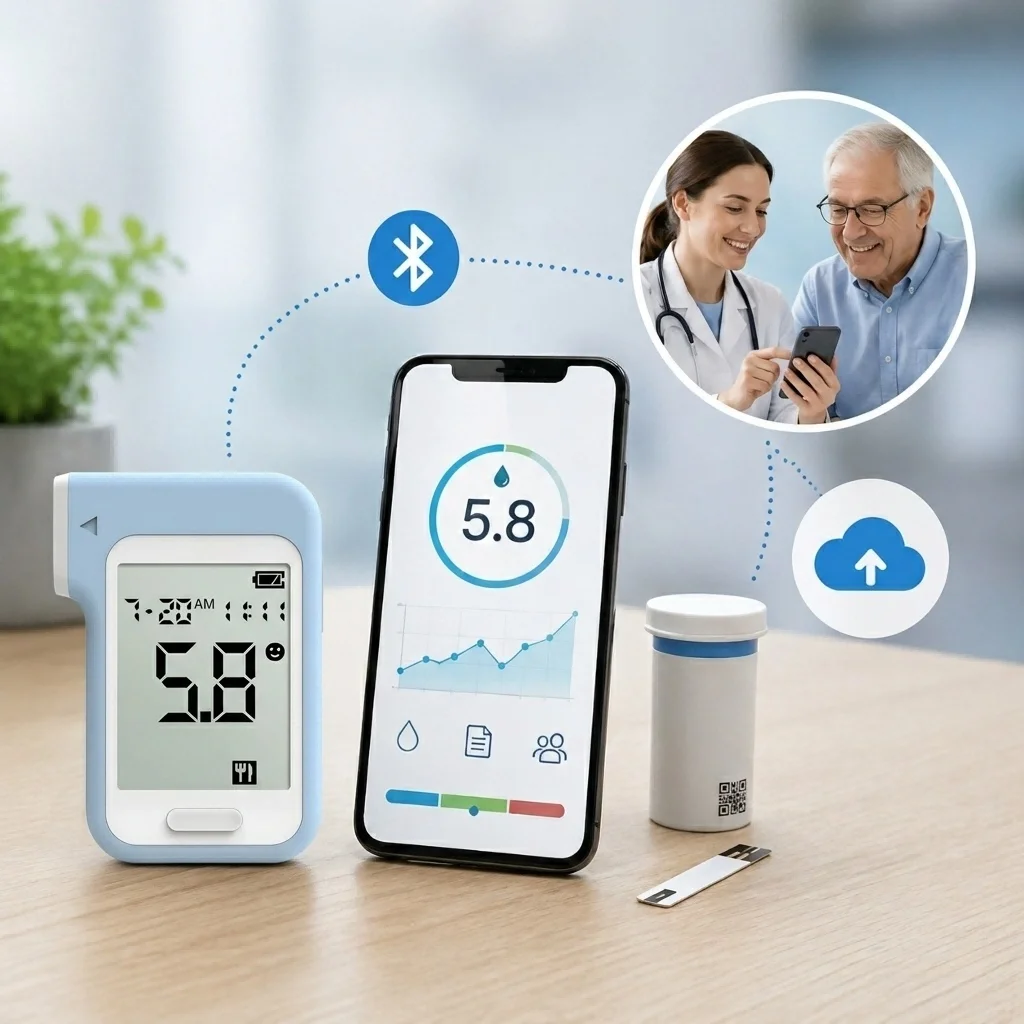
Connected glucose meters carry a higher price and more complex support requirements. Yesiwell's B2B guide helps distributors decide when the smart category is worth adding.
READ MORE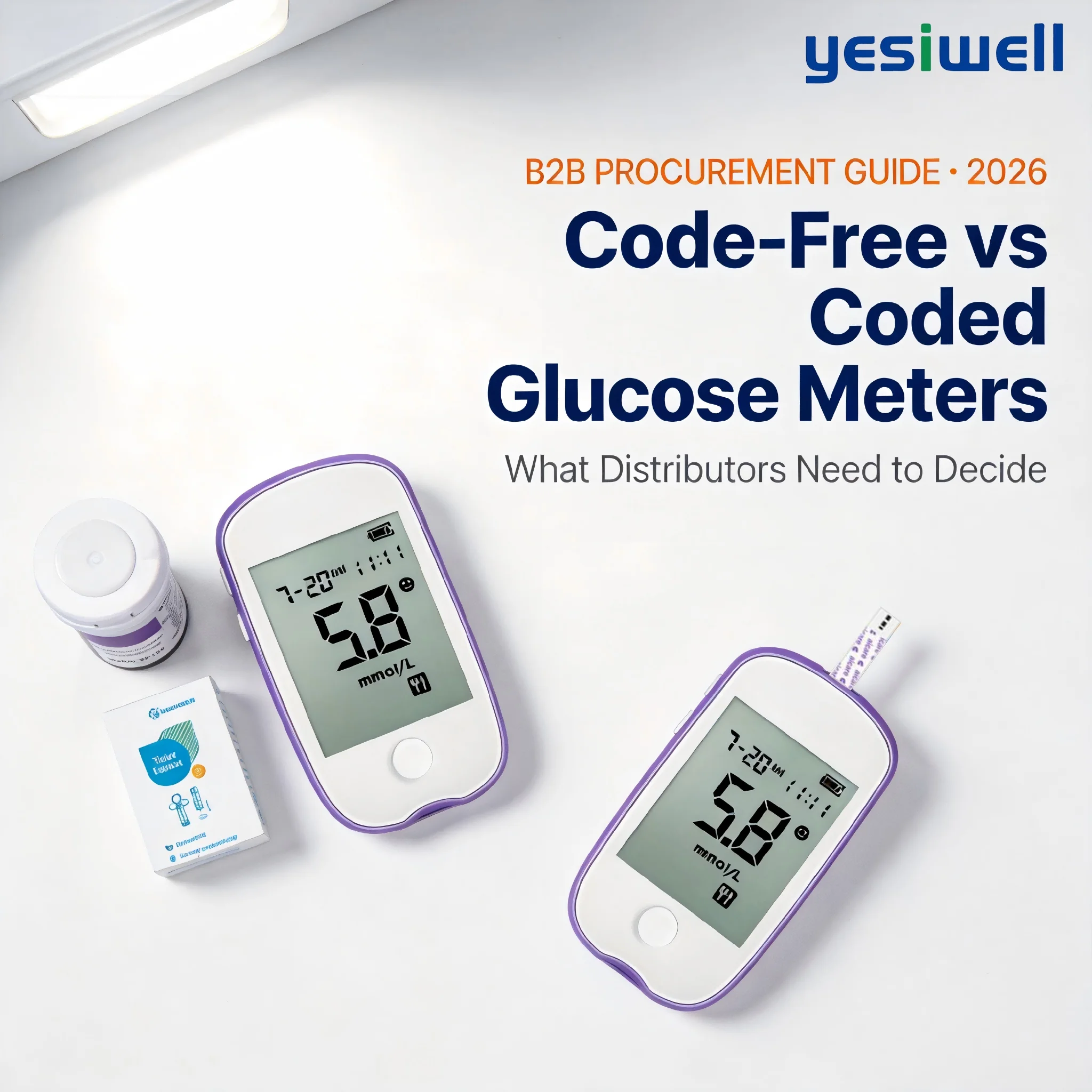
Most distributors default to code-free without asking why. The choice has real implications for your market, your margins, and how often customers call your support line.
READ MOREIf you are interested in our products, you can choose to leave your information here, and we will be in touch with you shortly.