B2B Distribution Guide | By Yesiwell Product & Sales Team | May 2026
The connected health device category has been growing for years, and blood glucose monitors with Bluetooth and app integration are increasingly visible in distributor catalogues. But "growing category" and "right for your channel" are different questions. This guide works through the commercial reality of adding smart glucose meters to a distribution range — what the premium actually buys, where the support burden lands, and which market segments make the investment worthwhile.
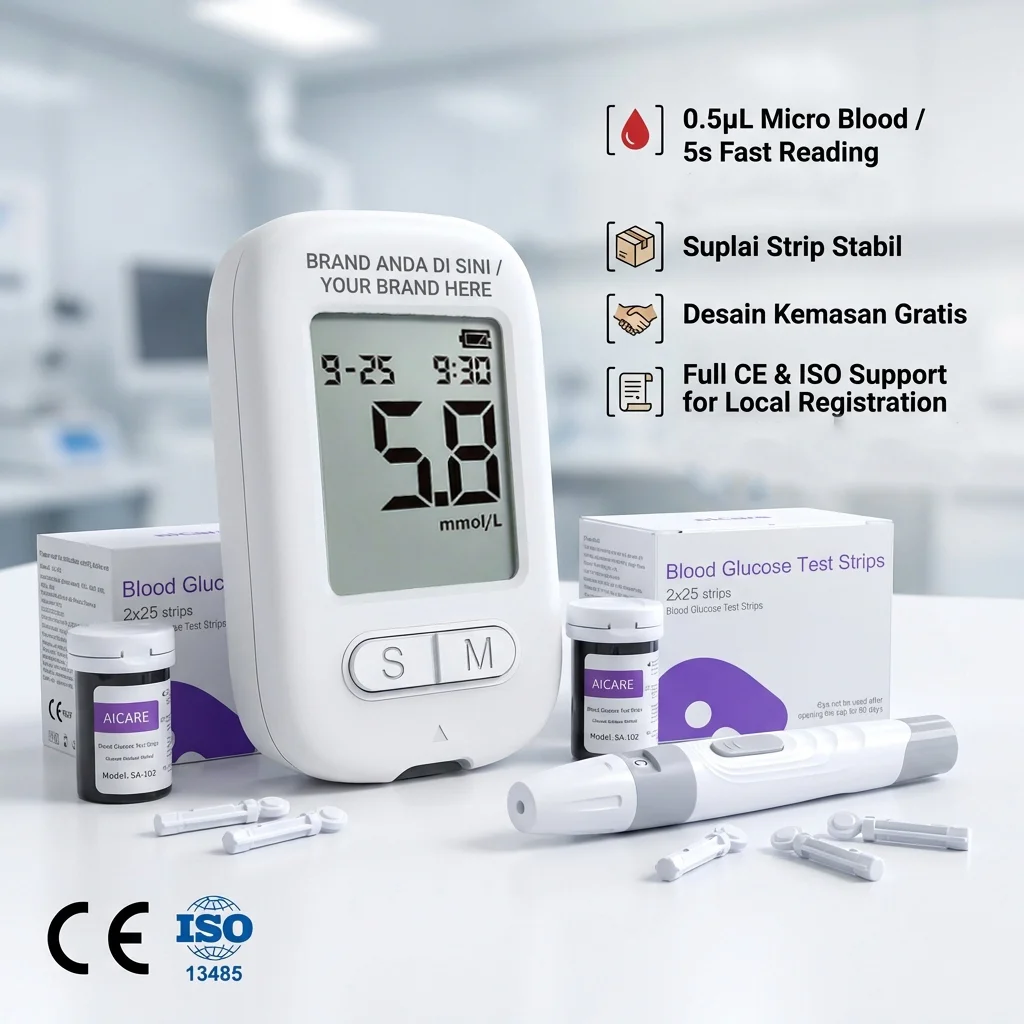
The term "smart" gets applied loosely to any device with a screen and a few extra features. For the purpose of this guide, a smart blood glucose meter means a device that transmits reading data — via Bluetooth — to a companion smartphone application, where results are logged, trended, and in some cases shared with a healthcare provider or carer.
The measurement itself works identically to a standard meter. The same electrochemical reaction, the same test strip, the same ISO 15197:2013 accuracy standard applies. What the Bluetooth connection adds is data management: the app replaces the paper logbook, aggregates readings over time, flags patterns, and can generate reports that a patient brings to a clinic appointment. For patients managing insulin dosing or working toward an HbA1c target, that data infrastructure has genuine clinical value.
For distributors, the question is not whether that value exists — it does — but whether the customers in your channel are the ones who will use it, pay for it, and not return the device when the app stops working on their phone model.
A Bluetooth glucose meter typically carries a 25–60% higher wholesale price than an equivalent standard meter from the same manufacturer. That premium covers three things: the Bluetooth module itself, the software development and maintenance cost of the companion app, and the more complex QA and compliance process that comes with a connected medical device.
The hardware premium is the smallest part. A Bluetooth chip adds a modest amount to unit cost at scale. The app is where the ongoing cost lives — and it is a cost that does not stop at the point of sale. Apps require iOS and Android updates, bug fixes, server infrastructure for cloud data storage (if offered), and customer support for connectivity issues. A manufacturer who cannot demonstrate a clear app maintenance roadmap is a risk you are inheriting as the distributor when something breaks in month eighteen.
Before committing to a smart meter SKU, ask your supplier three questions: (1) How many app versions have been released in the past 24 months? (2) What is the process when the app becomes incompatible with a new iOS or Android release? (3) Who handles customer support for app-related issues — the manufacturer or you? The answers tell you more about long-term viability than the product brochure will.
This is not an argument against the category. It is an argument for choosing a supplier whose software infrastructure is as serious as their hardware — and for being honest with yourself about whether your after-sales support capability can absorb connectivity questions alongside the usual device queries. For more on evaluating supplier reliability broadly, see our earlier guide: A Practical Checklist for Evaluating Home Medical Device Suppliers.
This is the question most distributor buying decisions skip, and it is the one that determines whether your smart meter SKU generates repeat orders or a pile of returns.
The customers who consistently use the companion app and derive value from it share a fairly specific profile: they are managing diabetes actively (not just monitoring occasionally), they are comfortable with smartphones, they are engaged in their own health data, and they either attend regular clinic appointments where the data is reviewed or they are self-managing insulin dosing with access to clinical guidance. In practice, this describes a meaningful but not dominant share of the home glucose monitoring market.
The customers who buy a smart meter, never open the app, or open it once and abandon it are also a real group. They bought the device because the packaging looked more capable than the basic model. The Bluetooth functionality did not add value to their routine. They did not return the device — but they will not specifically request it again, and they will not recommend it to someone else on the basis of the connectivity.
The segment to be genuinely cautious about is elderly patients. This is the largest volume segment in most pharmacy glucose meter markets, and it is the group least likely to engage with a companion app. A smart meter sold to an elderly patient who does not use a smartphone — or who uses one but does not want to manage another app — is a standard meter with a price premium that serves no one. Understanding what your actual end-user base looks like is the starting point for any smart category decision.
The appetite for connected glucose meters is not uniform across markets. Distribution partners who have tried to import a single global SKU strategy for smart devices have generally found that it does not hold.
Western Europe has the strongest foundation for connected glucose devices, but uptake is still concentrated in younger, more engaged patient segments and in digital health programmes run by insurers and healthcare systems. Germany and the Netherlands in particular have reimbursement frameworks that can support connected monitoring devices for qualifying patients — which creates a B2B opportunity in healthcare system procurement rather than retail pharmacy.
The GCC (UAE, Saudi Arabia, Kuwait) presents a more complex picture. Smartphone penetration is high, and the younger urban population in these markets has appetite for connected health devices. But diabetes prevalence in the region disproportionately affects older patients and lower-income populations who are significantly less likely to engage with app-based monitoring. A smart meter positioned at a premium price point needs careful channel selection — specialist clinics and corporate wellness programmes rather than general pharmacy distribution.
Southeast Asia and South Asia are earlier in the adoption curve. The infrastructure for connected health monitoring is growing, but the dominant purchase driver in most retail pharmacy channels remains price. Smart meters are beginning to appear in e-commerce channels in these markets, where the buyer profile skews younger and more digitally engaged, but they are not yet a mainstream pharmacy category in most of these countries.
One thing that does not change when a meter has Bluetooth is the consumable structure. A connected meter still requires compatible test strips, and the strip margin remains the primary recurring revenue driver for the category — smart or otherwise. Before adding a smart meter SKU, confirm that strip supply for that specific device is stable, that you control the supply chain rather than depending on the manufacturer's retail channel, and that the strip compatibility situation is clear to your end buyers.
We covered this in detail in The Real Cost of Blood Glucose Monitoring: Strip Supply & B2B Profitability. The economics of the smart meter category layer on top of that foundation — they do not replace it.
Pharmacy retail, elderly care, first-time buyers
Price-sensitive markets across EMEA and Asia
Higher unit volume, lower margin per unit
Lower support burden — no app, no connectivity issues
Available as code-free or coded depending on channel
Broader cuff of end-user profiles served
Active self-managers, younger patients, clinic programmes
Corporate wellness, digital health procurement channels
Lower unit volume, stronger margin per unit
Higher support burden — app issues land on distributor
Requires supplier with proven app maintenance track record
GCC and Western Europe are most viable primary markets
A question distributors increasingly face is how to position a Bluetooth glucose meter relative to Continuous Glucose Monitors (CGM). CGM devices measure glucose every few minutes automatically, without finger-prick testing, and send data continuously to a phone app. They are a categorically different product — more expensive, more complex, requiring sensor replacement every ten to fourteen days.
The practical implication for distribution strategy is that smart blood glucose meters and CGM devices serve different patient segments and price points. Smart meters are not a stepping stone to CGM — they serve patients who prefer or require finger-prick testing but want the data management benefit of app integration. We covered the clinical and commercial differences between CGM and BGM in a separate analysis. Understanding where each technology fits prevents the common mistake of treating "smart" as synonymous with "next-generation."
Who, specifically, in your current customer base will use the app? Not "who could in theory" — who will, based on what you know about your actual buyers. If the honest answer is "a minority," that is fine — but it defines your volume expectations.
What is the app's update history and iOS/Android compatibility track record? An app that has not been updated in eighteen months is a liability. Request version history and ask directly how compatibility with new operating system releases is managed.
What is the strip supply arrangement for the smart meter model? Smart meters are often newer product lines with less established strip supply chains. Confirm availability, lead times, and whether strips are available through channels you control or only through the manufacturer. See our strip supply guide for the full evaluation framework.
Does the device carry CE marking under MDR 2017/745 as a connected medical device? A Bluetooth-enabled glucose meter may require additional software-as-medical-device (SaMD) considerations under MDR. Verify that the CE scope covers the connected functionality, not only the measurement hardware.
What is the returns policy if the app becomes non-functional on a customer's device? This is a real scenario. Agree on a clear process before you have your first customer on the phone asking why their meter no longer syncs after a phone OS update.
“We added a Bluetooth meter to our range two years ago. It sells well in our online channel to buyers under 50 who research before purchasing. In our pharmacy network, it barely moves — the pharmacists found it harder to recommend because of the app setup questions. We kept both SKUs. They serve different customers entirely.”
— Medical device distributor, Northern Europe, Yesiwell partner
Yesiwell supplies both standard and smart Bluetooth blood glucose monitors, all meeting ISO 15197:2013 accuracy standards and available with full CE certification documentation. For distributors building a private-label range, our OEM program covers both standard and connected meter formats — including app interface customisation, packaging localisation, and regulatory support for EMEA market entry.
If you are evaluating which format — or which combination of formats — suits your channel, our sales team can walk you through the full range with sample units and pricing. Most conversations start with a short brief about your target market and customer profile.
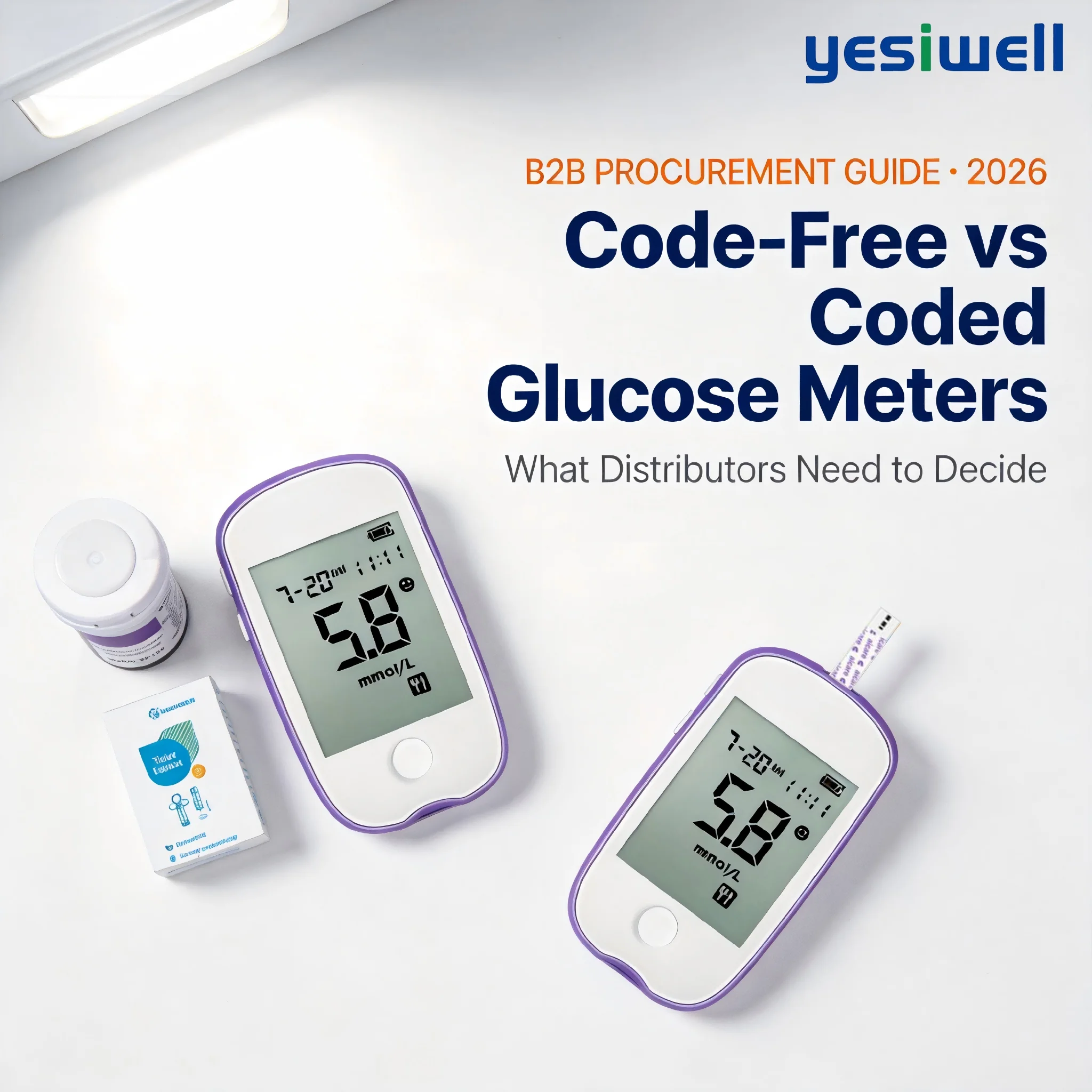
Most distributors default to code-free without asking why. The choice has real implications for your market, your margins, and how often customers call your support line.
READ MORE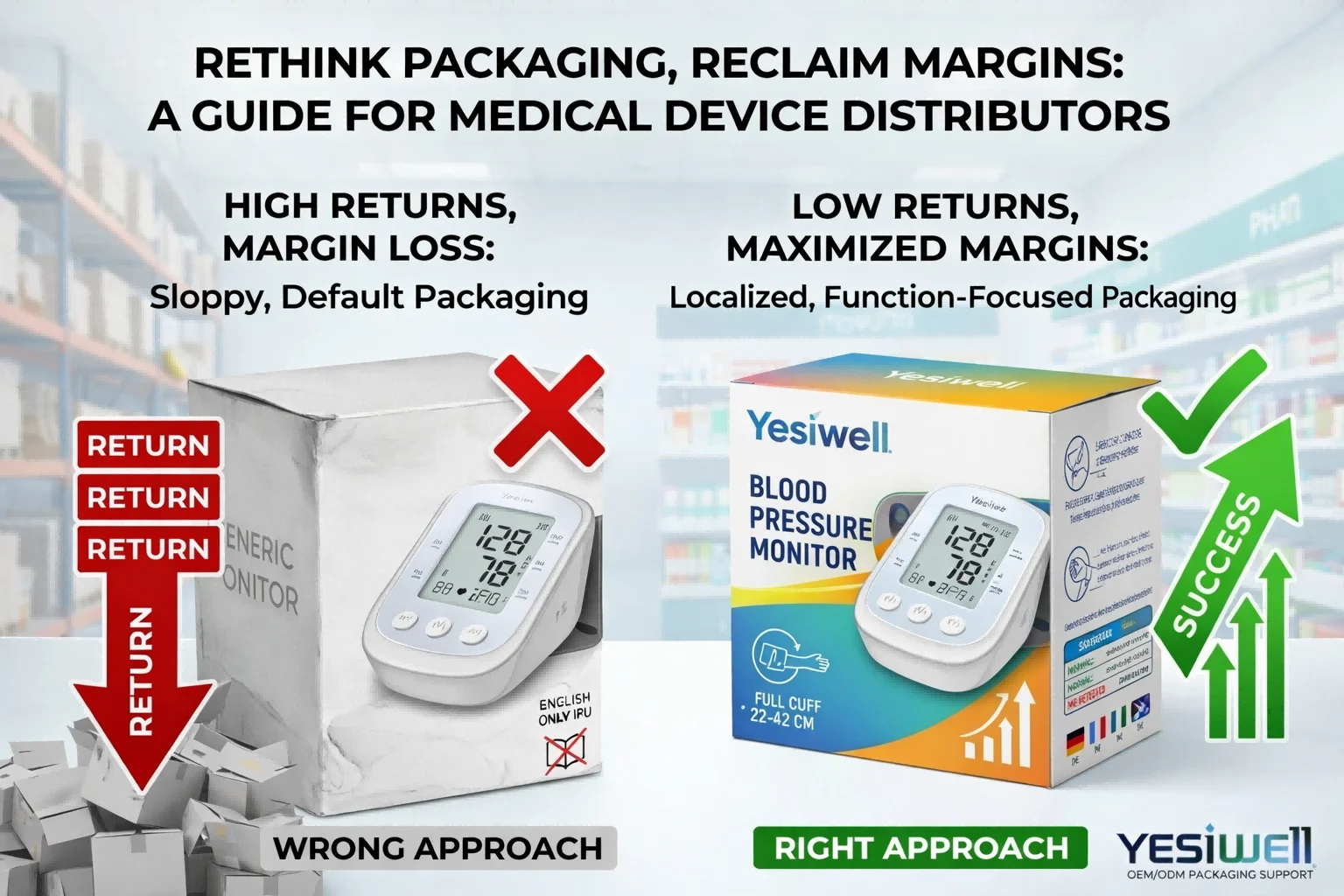
Poor packaging drives returns, compliance failures, and low sell-through. A practical OEM guide for distributors building private-label medical devices.
READ MOREIf you are interested in our products, you can choose to leave your information here, and we will be in touch with you shortly.