Diabetes Home Care | By Yesiwell Medical Team | May 2026
When a blood glucose reading comes back higher or lower than expected, the first instinct is to question the device. Most of the time, the device is fine. The reading is reflecting something real — just not what the person thinks it's reflecting. Seven testing habits account for the majority of inaccurate home readings, and none of them require a new meter to fix.
A blood glucose meter is a precision instrument measuring a biological sample that changes by the minute. The meter's job is to give you an accurate snapshot of your blood glucose at the moment of testing. But that snapshot is only as good as the sample you give it — and the sample is affected by everything that happened in the sixty seconds before the strip touched your blood.
Most manufacturers test their devices under controlled laboratory conditions and achieve accuracy well within the ISO 15197:2013 standard. In real-world home use, those same devices produce more variable results — not because the meter changed, but because the testing conditions did. Understanding what shifts the result helps you get readings you can actually act on.
Fruit sugars, cooking residue, and hand cream all contain compounds that can contaminate the blood sample and push the reading up — sometimes significantly. A finger that touched a piece of fruit ten minutes ago and was not washed since can produce a reading several mmol/L higher than the actual blood glucose level. The fix is washing hands with plain soap and water and drying them completely before testing. Alcohol wipes are a backup, not a substitute — alcohol does not remove sugar residue, and if the wipe has not dried fully before lancing, it can dilute the sample and give a falsely low reading.
When the blood drop is slow to form, the instinct is to squeeze or milk the finger. Hard squeezing forces interstitial fluid — the fluid between cells — into the blood drop, diluting the glucose concentration in the sample. The result is a reading lower than the actual blood glucose level. The better approach is to warm your hands first (run them under warm water or rub them together), use the side of the fingertip rather than the pad, and let gravity help by holding the hand downward after lancing. A gentle milking motion starting from the base of the finger is acceptable; hard squeezing at the puncture site is not.
Test strips contain an enzyme — typically glucose oxidase or glucose dehydrogenase — that reacts with glucose in the blood sample to produce a measurable signal. That enzyme degrades over time, and the degradation accelerates with heat, humidity, and light exposure. An expired strip, or a strip stored in a bathroom cabinet or left in a hot car, may still produce a reading — the meter has no way to know the strip is compromised — but the reading will be unreliable. Check the expiry date on the vial before every new batch, and always replace the cap immediately after removing a strip. A strip left exposed to air for more than a few minutes before testing should be discarded.
Blood glucose meters are calibrated to work within a specific temperature range — typically 10°C to 40°C for the device, and a slightly narrower range for the strips. Testing in a cold room, directly after coming in from outside in winter, or in a hot environment can produce readings that are outside the device's calibrated accuracy range. The meter itself may display an error code in extreme conditions, but mild temperature deviations often produce no warning — just a slightly shifted result. If you suspect temperature may be affecting your readings, let the meter and strips sit at room temperature for ten to fifteen minutes before testing.
Repeated lancing of the same location causes the skin to thicken and harden over time — a process called callus formation. Callused skin is less well-supplied with blood, which means the blood drop forms more slowly and is more likely to be contaminated with interstitial fluid when squeezed. Rotating between fingers and between sites on each finger keeps the skin healthier and produces cleaner samples. The fingertips are the most common testing site, but the sides of the fingertips — away from the nerve-dense pad — tend to be less painful and heal faster with regular use.
Most meters include a control solution test as part of the setup, and the manufacturer recommends running a control test when opening a new vial of strips, if the meter has been dropped, or if readings seem inconsistent with how you feel. In practice, most home users never run a control test after the initial setup. The control solution has a known glucose concentration — if the meter reads within the acceptable range for the control solution, the system is working correctly. If it does not, the strips, the meter, or both may need replacing. Control solution has its own expiry date; using expired control solution gives meaningless results.
Two different glucose meters measuring the same blood sample at the same time will rarely give identical readings — even if both are performing within their stated accuracy specifications. Each device uses slightly different chemistry, a different calibration approach, and may be calibrated to plasma rather than whole blood, or vice versa. The ISO 15197 standard allows for a ±15% variation at higher glucose concentrations, which means two compliant meters could theoretically differ by up to that margin and both be correct. Comparing readings between your meter and a hospital meter, or between your current device and an older one, and concluding one is "wrong" is not a valid test. What matters is consistency within a single device over time — that is the trend that guides your management decisions.
All seven of the above are user-side issues. There are also genuine device-side failure modes worth knowing. A meter that has been dropped onto a hard surface may have a damaged sensor. A strip vial that was not sealed properly may have moisture-damaged strips throughout, not just the one you used. And a meter that is several years old may have a battery producing insufficient voltage to power the sensor consistently — which can cause random low readings with no other obvious cause.
If you have ruled out all seven testing habits and readings remain inconsistent with your symptoms, a control solution test is the right next step. If the meter fails the control test, the device — or more likely the strips — needs replacing.
“I had a patient convinced her meter was broken because she was getting readings two to three points higher than she expected every morning. Turned out she was testing right after cutting fruit for her breakfast and not washing her hands first. Fixed in thirty seconds. No new equipment needed.”
— Diabetes nurse educator, shared with Yesiwell
Yesiwell's blood glucose monitor range is designed for accurate, consistent home testing — with large displays, simple strip insertion, and clear result screens that reduce the chance of user error at every step. All devices comply with ISO 15197:2013 accuracy standards.
For distributors and pharmacies building a diabetes care range, we also offer wholesale supply and OEM private-label programs. Contact our team to request product samples and pricing.
VIEW BLOOD GLUCOSE MONITOR RANGE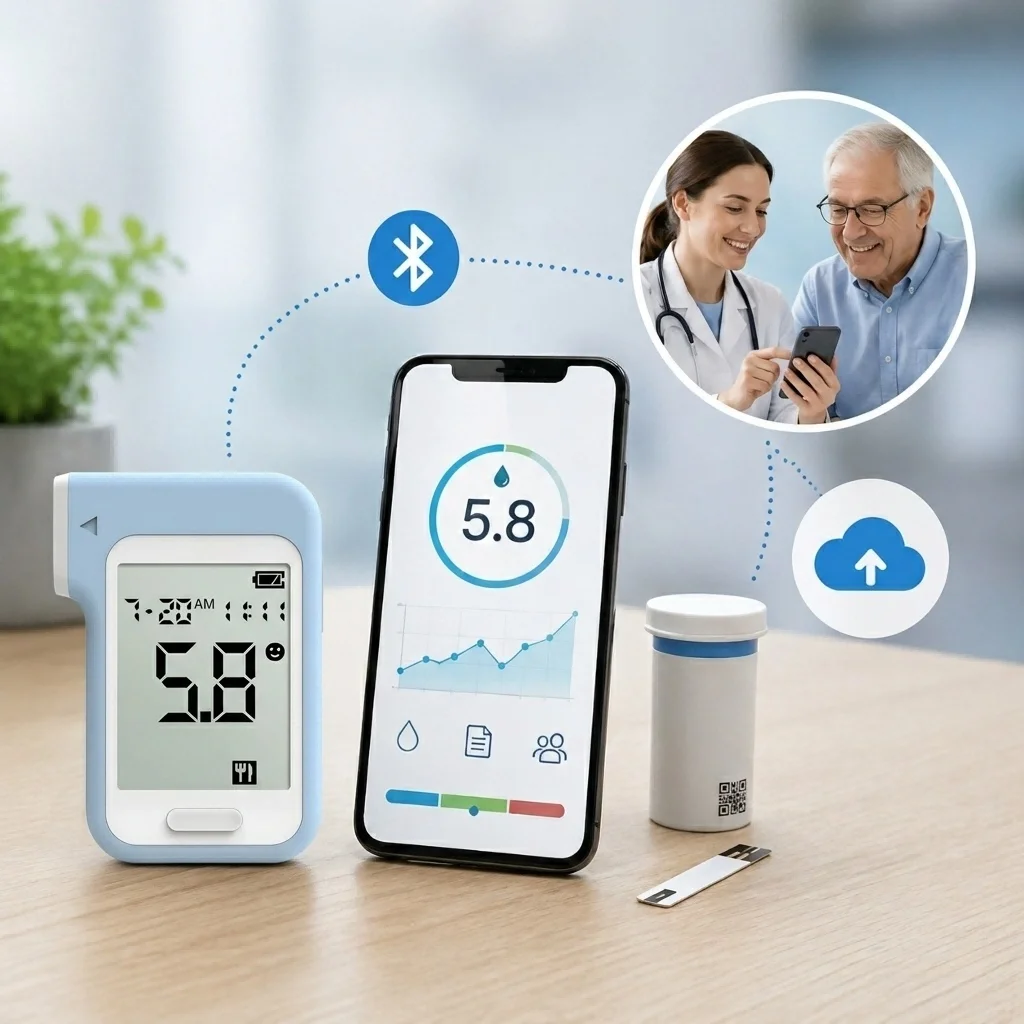
Connected glucose meters carry a higher price and more complex support requirements. Yesiwell's B2B guide helps distributors decide when the smart category is worth adding.
READ MORE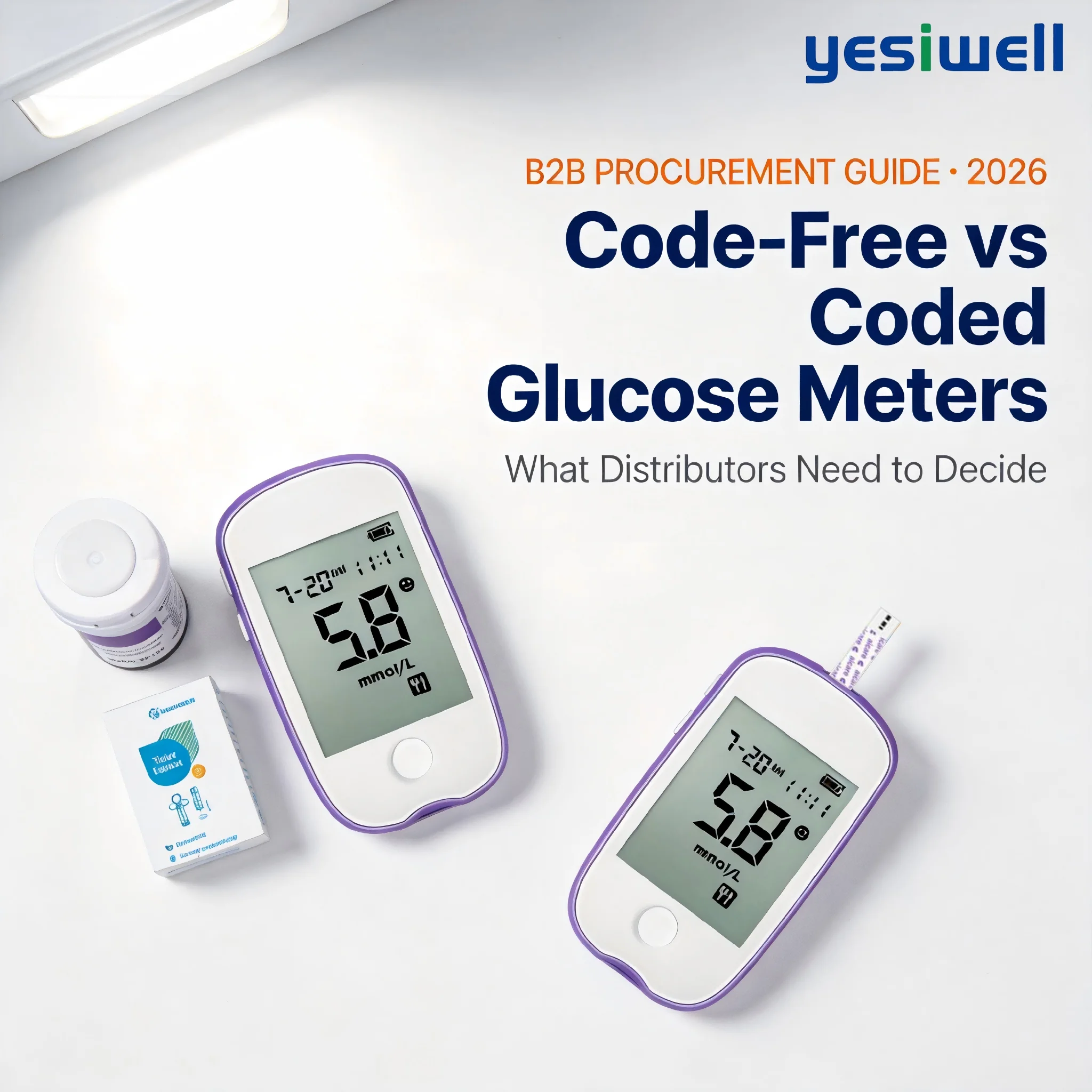
Most distributors default to code-free without asking why. The choice has real implications for your market, your margins, and how often customers call your support line.
READ MORE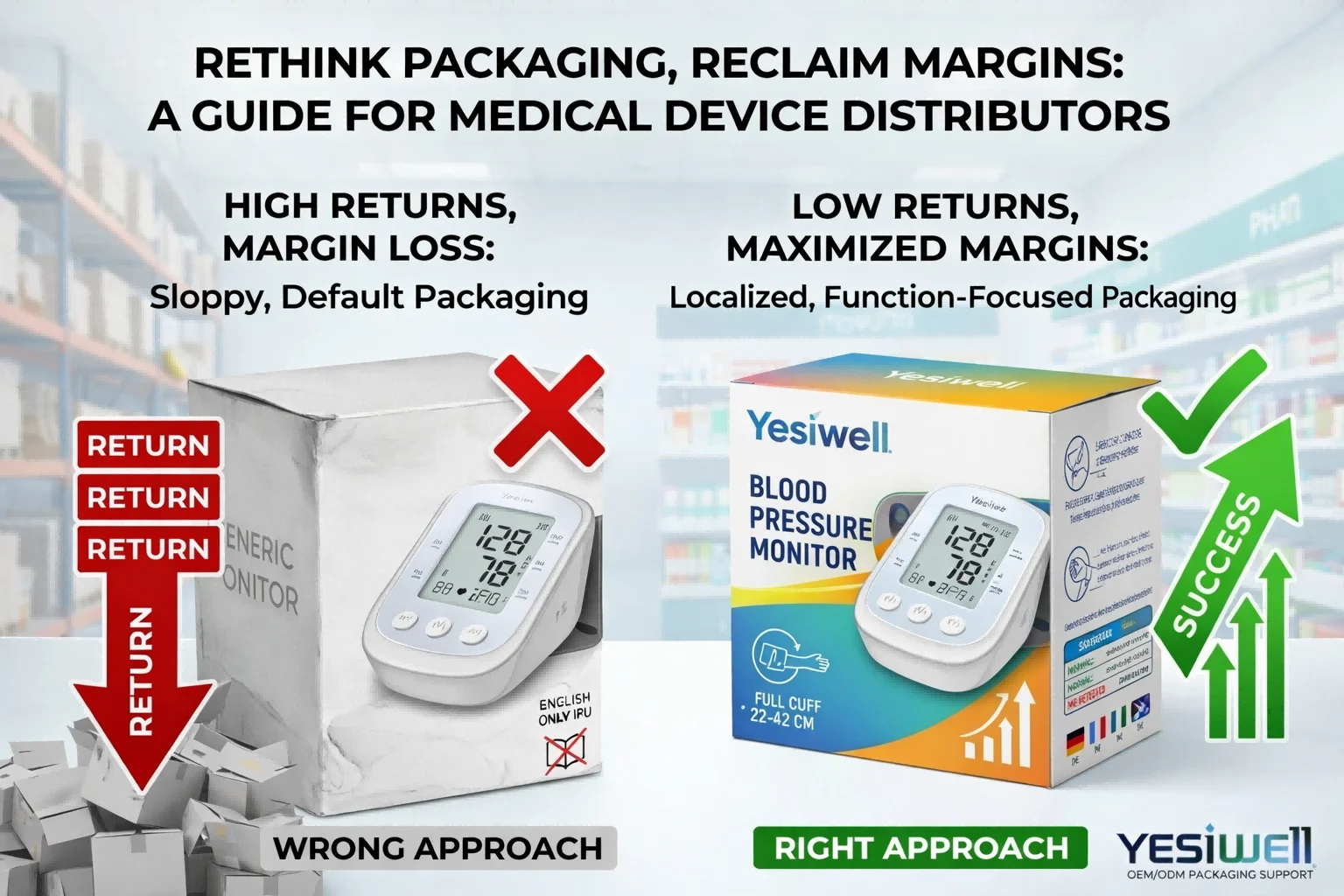
Poor packaging drives returns, compliance failures, and low sell-through. A practical OEM guide for distributors building private-label medical devices.
READ MOREIf you are interested in our products, you can choose to leave your information here, and we will be in touch with you shortly.