Professional procurement teams often default to the widely recognized ±15% accuracy standard when vetting glucose monitoring systems. Yet, this reliance overlooks a critical industry truth: regulatory compliance does not equate to clinical excellence. The genuine indicator of a device’s precision—and the key to unlocking better patient outcomes—lies hidden within the Mean Absolute Relative Difference (MARD). While ±15% defines the regulatory minimum, MARD is the definitive measure of real-world clinical performance.
The ±15% criterion is derived from the ISO 15197 standard, serving strictly as the minimum acceptable threshold for market entry.
The Compliance Trap: Meeting ISO 15197 is a necessary starting point, but it provides no differentiation regarding actual performance quality. A pass certificate only verifies the least a device must achieve.
Data Distortion: This standard only requires a certain percentage of readings to fall within the specified range. It fails to capture the comprehensive picture—specifically the data distribution, overall bias, and the consistency of accuracy across the full spectrum of glucose values, particularly at critical hypo/hyperglycemic extremes.
A Procurement Blind Spot: The industry must move past the assumption that "compliant" is synonymous with "high-performance." This metric, if used exclusively, masks significant variability in reliability and clinical utility.
MARD offers a statistically robust and clinically honest assessment of device performance, overcoming the limitations of the binary ±15% system.
Mechanism of Truth: MARD calculates the average percentage of deviation between the meter's reading and the validated laboratory reference measurement (the true value) across every single data point tested. This provides a holistic figure for the system's central error tendency.
Strategic Value: By averaging the absolute error across the entire testing population, MARD prevents manufacturers from "cherry-picking" or utilizing skewed data to meet a minimum threshold. It delivers a verifiable and comprehensive indicator of overall accuracy.
For procurement professionals, MARD is not just a clinical metric; it is a key performance indicator (KPI) for commercial success and risk mitigation.
MARD Performance Benchmark | Clinical Interpretation |
Exceptional | < 8% (Industry Leadership) |
Acceptable | 8.0% – 10.0% (Meets Expectations) |
Marginal | > 10.0% (Increased Clinical Risk) |
·
User Confidence and Retention (GMV): In models driven by repeat consumable sales (e.g., test strips), demonstrated low MARD translates directly into superior clinical confidence. This fosters long-term patient adherence and drives higher repurchase rates.
Institutional Adoption: Leading healthcare institutions and national reimbursement bodies are increasingly prioritizing MARD. Systems with demonstrably lower MARD figures benefit from accelerated regulatory acceptance and adoption within high-volume clinical and hospital channels.
Stability Across the Range: A low MARD guarantees accuracy stability, even when glucose levels fluctuate wildly—a critical factor for safe and effective diabetes management.
Consider two competing devices, both of which legally achieve ±15% ISO compliance:
Device | ISO 15197 Compliance | MARD (Average Absolute Error) |
Vendor A | Compliant (±15%) | 11.8% |
Vendor B | Compliant (±15%) | 7.2% |
The Procurement Imperative: If sourcing decisions are based solely on the ±15% criterion, Vendor A and B are treated identically, despite Vendor B being demonstrably 40% more accurate on average across the entire operational range. MARD is the essential metric for effective differentiation. It is the true cost-of-ownership indicator that mitigates clinical risk and ensures the delivery of quality patient monitoring.
The standard of due diligence for glucose monitoring systems must be elevated. Professional buyers must transition their focus from the passive minimum of ±15% compliance to the active, predictive measure of MARD.
MARD is the most robust, statistically defensible metric available to predict real-world clinical reliability and secure long-term value.
Actionable Checklist for Vendor Selection:
Procurement teams should require complete transparency and demand the following from every potential supplier:
1.The verified MARD percentage (below 8% is industry best-in-class).
2.The corresponding Consensus Error Grid (CEG) or Clarke Error Grid scatter plots.
3.Full disclosure of the sample size and clinical testing methodology.
Prioritize MARD to drive evidence-based purchasing decisions that lead to superior clinical outcomes and sustained commercial success.
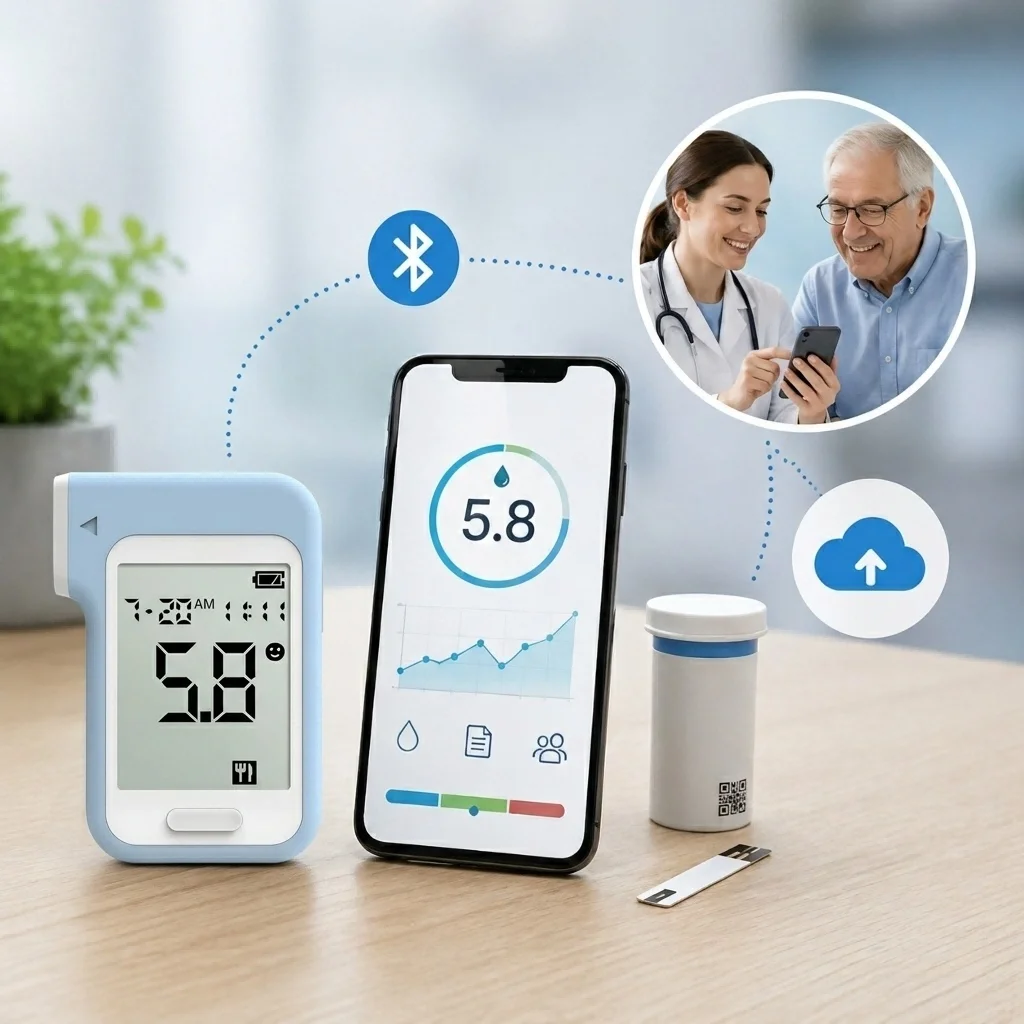
Connected glucose meters carry a higher price and more complex support requirements. Yesiwell's B2B guide helps distributors decide when the smart category is worth adding.
READ MORE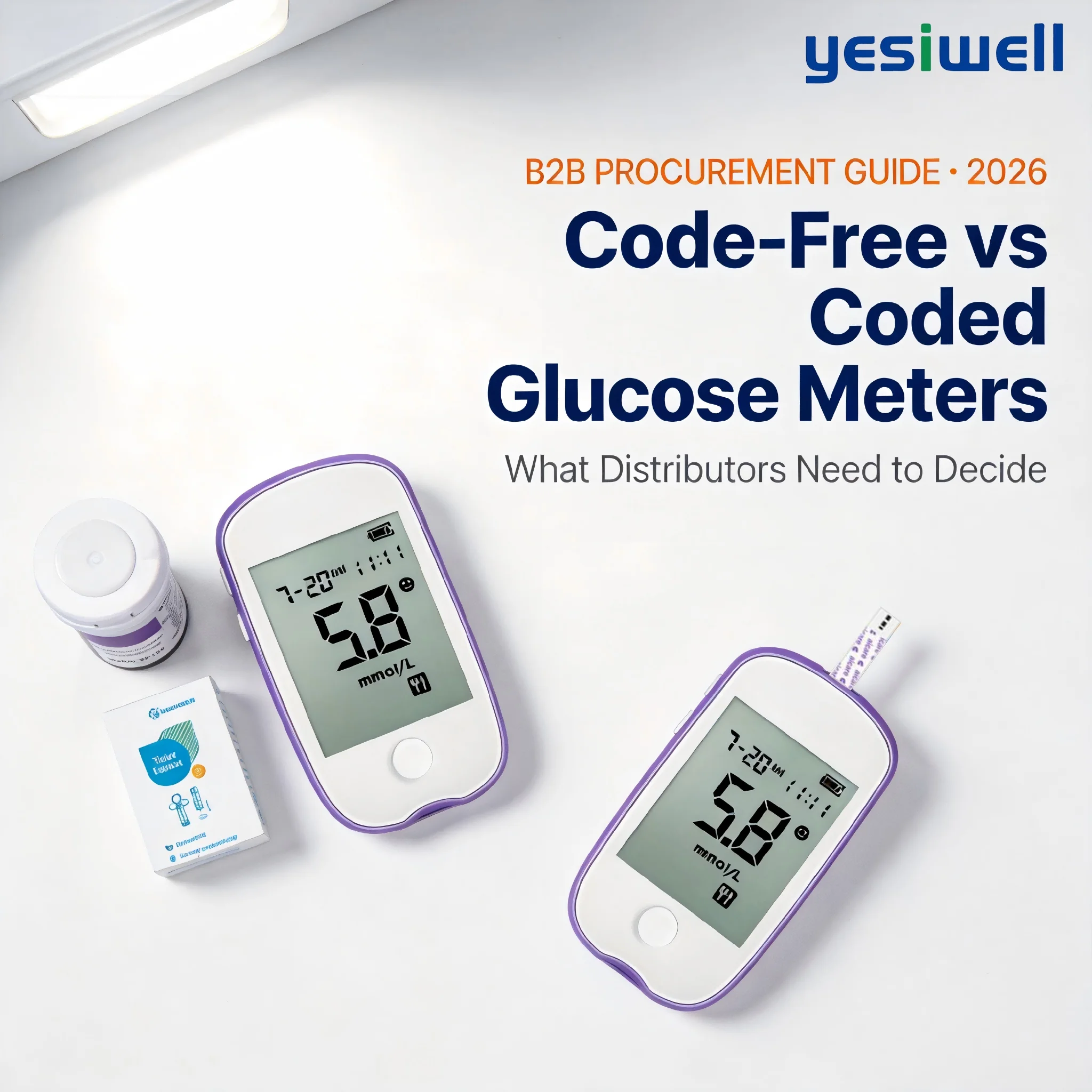
Most distributors default to code-free without asking why. The choice has real implications for your market, your margins, and how often customers call your support line.
READ MOREIf you are interested in our products, you can choose to leave your information here, and we will be in touch with you shortly.