As global demand for home blood glucose monitoring continues to grow, expectations around accuracy are changing. What was once considered “acceptable” is no longer sufficient for many professional buyers. Across multiple markets, accuracy is shifting from a regulatory checkbox to a competitive differentiator.
This shift is reshaping how distributors, brand owners, and OEM partners evaluate glucose meters—particularly at scale.
International standards such as ISO 15197 have long provided a baseline for glucose meter accuracy. While these standards remain essential for regulatory compliance, they were never designed to rank performance among competing products.
In practice, many devices meet the same compliance thresholds while delivering noticeably different real-world results. As the market matures, buyers are becoming more sensitive to this gap.
In procurement discussions today, the question is increasingly:
“Is this device compliant?”
followed immediately by:
“How consistent is its performance over time and across user scenarios?”
Several structural trends are accelerating this shift:
Growth of home-based chronic disease management
More users rely on daily self-monitoring, increasing exposure to accuracy variability.
Expansion of private-label programs
Brand owners carry reputational risk when performance falls short.
Greater data transparency
Buyers now have access to comparative performance metrics, not just certificates.
Pressure on downstream costs
Returns, complaints, and customer support expenses are closely linked to measurement reliability.
As a result, accuracy is increasingly evaluated as a business risk factor, not just a technical attribute.
Mean Absolute Relative Difference (MARD) has emerged as a practical metric for understanding real-world accuracy.
Unlike pass/fail thresholds, MARD reflects average deviation across all measurements. This allows buyers to assess:
Stability across different glucose ranges
Algorithm consistency rather than isolated best results
Likely user experience during long-term use
In sourcing conversations, MARD provides a clearer picture of how a device will behave once deployed at scale.
It is increasingly common for two glucose meters to share identical certifications while delivering very different commercial outcomes.
Devices with higher average deviation may:
Generate more user complaints
Undermine confidence in test results
Trigger higher return and replacement rates
Reduce long-term consumable reorders
From a buyer’s perspective, these outcomes directly impact margin stability and brand positioning.
Experienced procurement teams are updating their evaluation frameworks to include:
MARD data with disclosed sample sizes
Performance consistency across low and high glucose ranges
Batch-to-batch stability indicators
Post-market performance feedback
Clear explanations of measurement algorithms and updates
This approach shifts supplier selection from price-driven decisions toward performance-based partnerships.
For OEM and ODM manufacturers, rising accuracy expectations represent both a challenge and an opportunity.
Suppliers able to demonstrate stable, well-documented performance gain:
Stronger positioning in long-term contracts
Lower churn in private-label relationships
Greater trust from regulated channels
Conversely, reliance on compliance claims alone is becoming less effective in competitive tenders.
The global glucose meter market is entering a phase where accuracy transparency matters as much as regulatory approval. As buyer expectations evolve, metrics that reflect real-world performance—rather than minimum thresholds—are becoming central to procurement decisions.
For B2B buyers, evaluating accuracy beyond basic compliance is no longer optional. It is a necessary step toward reducing operational risk, protecting brand value, and sustaining growth in increasingly competitive markets.
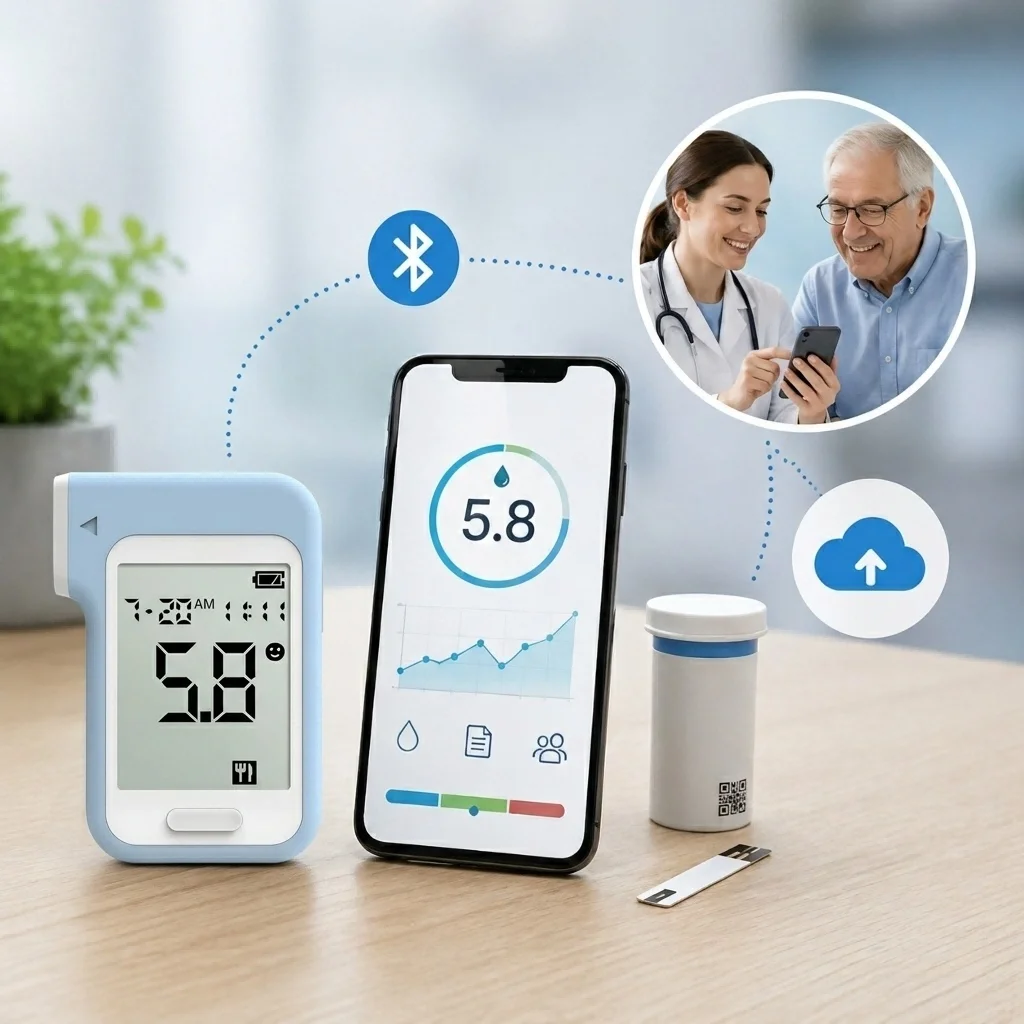
Connected glucose meters carry a higher price and more complex support requirements. Yesiwell's B2B guide helps distributors decide when the smart category is worth adding.
READ MORE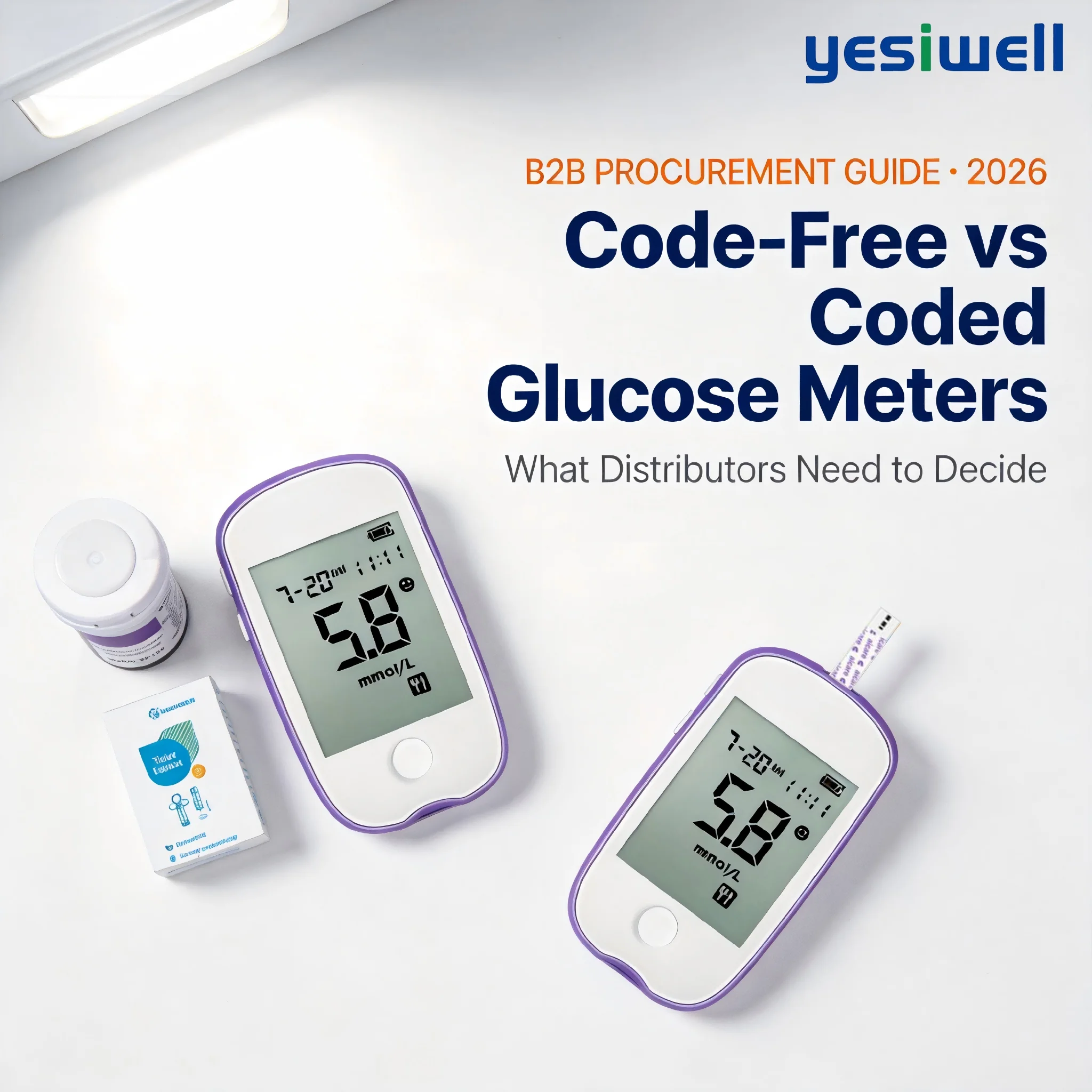
Most distributors default to code-free without asking why. The choice has real implications for your market, your margins, and how often customers call your support line.
READ MOREIf you are interested in our products, you can choose to leave your information here, and we will be in touch with you shortly.